

Is Terrazzo Slippery ?
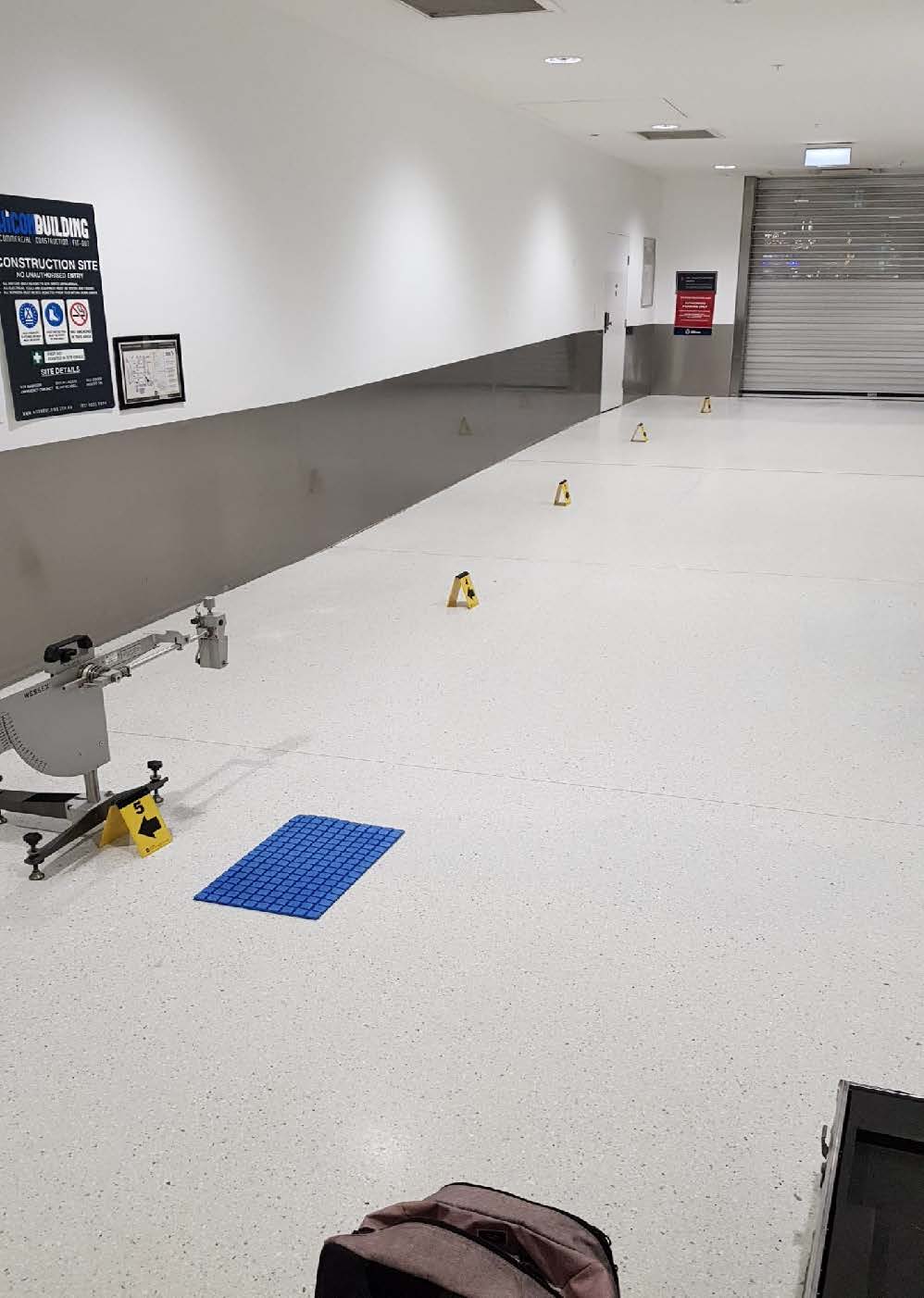
Terrazzo can be slippery when wet, particularly if it has a high-gloss finish. Like many smooth surfaces, polished terrazzo lacks texture, which can reduce traction. However, the slipperiness depends on several factors:
- Finish Type – Honed or matte finishes provide better slip resistance than highly polished surfaces.
- Sealers & Coatings – Some sealers enhance grip, while others may create a slicker surface.
- Surface Treatment – Anti-slip additives, such as grit or non-slip coatings, can be applied to increase traction.
- Maintenance – Regular cleaning removes dust and spills, but excessive waxing or using improper cleaning products can make terrazzo more slippery.
- Location & Usage – Terrazzo in wet areas requires slip-resistant treatment/consideration compared to dry indoor spaces.
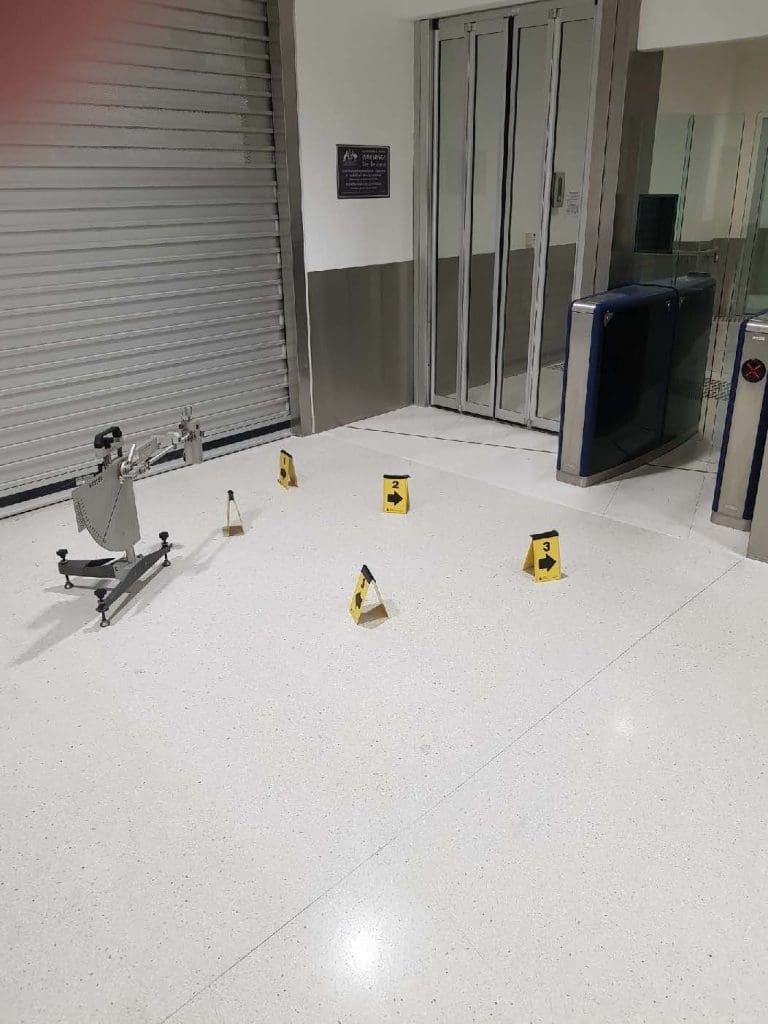
Non-Slip Ratings in Australia
In Australia, slip resistance is measured according to the Standards Australia AS 4586:2013 guidelines. This standard specifies different testing methods and classifications to assess slip resistance for various surfaces, including terrazzo.
Types of Slip Resistance Tests & Ratings
1. Wet Pendulum Test (P-Ratings)
Measures slip resistance in wet conditions, commonly used for indoor and outdoor flooring.
| Pendulum Class | Slip Resistance (SRV Range) | Suitability |
|---|---|---|
| P0 | <12 | Very slippery, not recommended |
| P1 | 12–24 | Low slip resistance |
| P2 | 25–34 | Moderate slip resistance (e.g., dry indoor areas) |
| P3 | 35–44 | Suitable for wet areas (e.g., covered outdoor areas, kitchens) |
| P4 | 45–54 | Good slip resistance (e.g., bathrooms, public walkways) |
| P5 | ≥55 | High slip resistance (e.g., ramps, external walkways, pool surrounds) |
Oil-Wet Inclining Platform Test (R-Ratings)
Used mainly for commercial environments, particularly in kitchens and industrial areas.
| Ramp Class | Slip Angle (°) | Suitability |
|---|---|---|
| R9 | 6–10° | Low slip resistance (dry indoor use only) |
| R10 | 10–19° | Moderate slip resistance (e.g., shopping centres) |
| R11 | 19–27° | Suitable for wet areas (e.g., commercial kitchens) |
| R12 | 27–35° | High slip resistance (e.g., external walkways, car parks) |
| R13 | >35° | Very high slip resistance (e.g., greasy or wet industrial areas) |
Recommended Slip Ratings for Different Areas
The recommended slip resistance ratings for various areas in Australia follow AS 4586:2013 and HB 198:2014 guidelines. These ensure flooring surfaces provide adequate traction in different environments.
Indoor Areas
| Area | Minimum Recommended Rating |
|---|---|
| Residential living areas | P2 / R9 |
| Hallways & corridors | P2–P3 / R9–R10 |
| Kitchens (residential) | P3 / R10 |
| Bathrooms, laundries, toilets | P3–P4 / R10–R11 |
| Aged care facilities | P3–P4 / R10–R11 |
Commercial & Public Buildings
| Area | Minimum Recommended Rating |
|---|---|
| Office spaces | P2 / R9 |
| Retail stores & shopping centres | P3 / R10 |
| Commercial kitchens | P4–P5 / R11–R12 |
| Hospitals & medical facilities | P3–P4 / R10–R11 |
| Public toilets & amenities | P3–P4 / R10–R11 |
| Entrance lobbies (external) | P4–P5 / R11–R12 |
Outdoor & High-Traffic Areas
| Area | Minimum Recommended Rating |
|---|---|
| Footpaths & public walkways | P4–P5 / R11–R12 |
| Ramps (gradient <1:14) | P4 / R11 |
| Ramps (gradient >1:14) | P5 / R12 |
| Car parks & driveways | P4–P5 / R11–R12 |
| Balconies & verandahs | P3–P4 / R10–R11 |
Wet & Barefoot Areas
| Area | Minimum Recommended Rating |
|---|---|
| Swimming pool surrounds | P5 / R12 |
| Pool ramps & steps | P5 / R13 |
| Showers & change rooms | P4–P5 / R11–R12 |
| Steam rooms & saunas | P4–P5 / R11–R12 |
How to improve your slip rating
If slip resistance is a concern, consider the following:
- Use a slip-resistant finish – Opt for a honed, textured, or sandblasted finish. Finishing your terrazzo at different grit levels will be able to provide different slip ratings.
- Apply non-slip coatings – Special coatings can improve grip as the correct choice of sealer can be critical. An impregnating sealer will not affect slip ratings compared to a high-build topical sealer. Additives can be put in topical sealers to provide an improved slip rating.
- Use rugs or mats – In high-risk areas, non-slip mats can provide extra safety. Also known as walk-off mats used at entrances to buildings from the street.
Terrazzo can be slippery, but its safety depends on how it’s treated and maintained. With the right precautions, it can be a safe and stylish flooring option for both residential and commercial spaces.